Vista Murrieta Deaf Panelist Day
TAC EVENTS
The Evolution of the Deaf Panelist Day
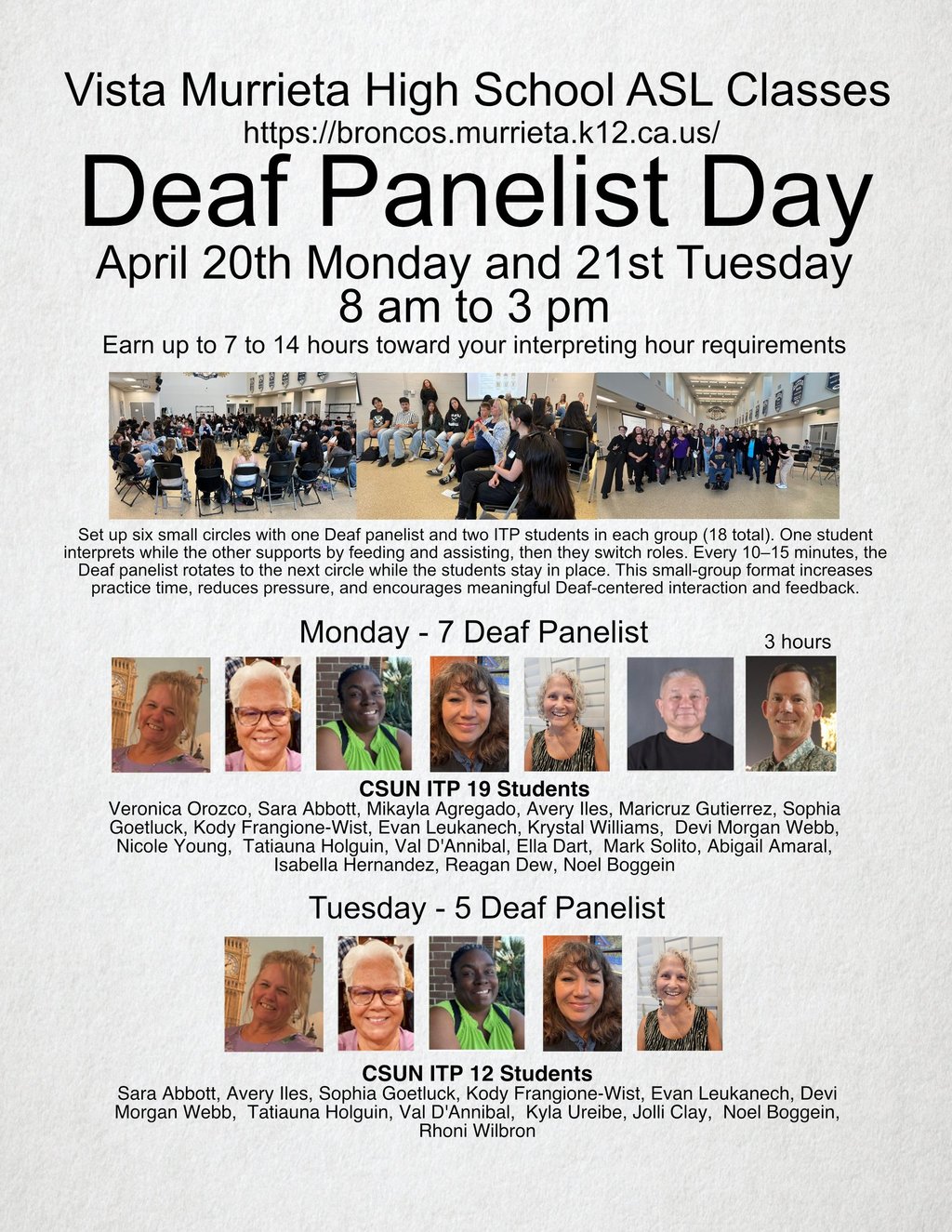
What began three years ago as a humble initiative by Yoon Lee has blossomed into one of the most impactful educational traditions in our local ASL community. The concept was born from a simple yet profound idea: that the best way to learn about the Deaf experience is to listen directly to those who live it. In its earliest days, the format was intimate—one Deaf interpreter sitting in a circle with 15 to 20 hearing ASL students, supported by a handful of ITP students. This close-knit setting stripped away the formal barriers of a classroom, allowing for an organic and vulnerable exchange of stories.
The Power of the Circle
The "Circle Format" is a deliberate choice that emphasizes equality and connection. In this space, Deaf panelists share the raw and real aspects of their lives—from the challenges of navigating a hearing world to the vibrant joys of Deaf culture and community. For the 15 to 20 ASL students in attendance, it is a rare opportunity to move beyond vocabulary lists and grammar rules. They are given the floor to ask deep, meaningful questions about "Deaf life," gaining insights that textbooks simply cannot provide. This direct dialogue builds empathy, breaks down stereotypes, and reinforces the importance of cultural humility.
A Training Ground for Future Interpreters
Beyond the dialogue, the Deaf Panelist Day serves as a critical practicum for ITP students. With two to four interpreter students typically assigned to each session, these future professionals are given a safe yet challenging environment to practice their skills. They aren't just observing; they are actively bridging the gap between the panelists and the learners. This "real-world" pressure is essential for developing the stamina and quick thinking required in the field. Under the guidance of Yoon Lee and the participating Deaf mentors, these students learn the nuances of voice interpreting and the ethical responsibilities of being a communication bridge.
From a Simple Idea to a Lasting Legacy
Three years later, this initiative continues to prove that when we prioritize Deaf voices, the entire community rises. What started as a small circle has become a cornerstone of our curriculum, demonstrating the criticality of mentorship and authentic representation. By providing this platform, we aren't just teaching a language; we are honoring a culture and ensuring that the next generation of signers and interpreters enters the community with a foundation of respect, understanding, and lived perspective.